


What's Hot
5 min to read
Campus Marketing by School Type: D1, HBCU, Commuter
Learn how to tailor college campus activations to D1, HBCU, commuter, and small liberal arts schools
Laura Gomez
Campus culture shapes what college students care about, so brand activations work best when they're built for the type of school. This piece breaks down D1, HBCU, commuter, and small liberal arts campuses.
I go to Middlebury College, a small liberal arts school in Vermont where running into someone you know is practically unavoidable. I can leave my dorm to grab coffee and somehow end up having three conversations before I get there.
Being involved in our college activities board has made me realize just how much campus culture influences what students get excited about. An event that would have people lining up at a huge state university might get a completely different reaction at a smaller school. And a campaign built around students spending their weekends on campus might miss the mark somewhere most people commute.
For brands trying to reach college students, it helps to understand what life at their school actually looks like.
How Do Brands Reach Students at D1 Schools?
At many NCAA Division I schools, game day is practically an event of its own. Students plan their outfits, make plans with friends, and spend the weekend surrounded by school spirit.
I love watching college game-day content because the energy comes through even when you’re sitting hundreds of miles away.
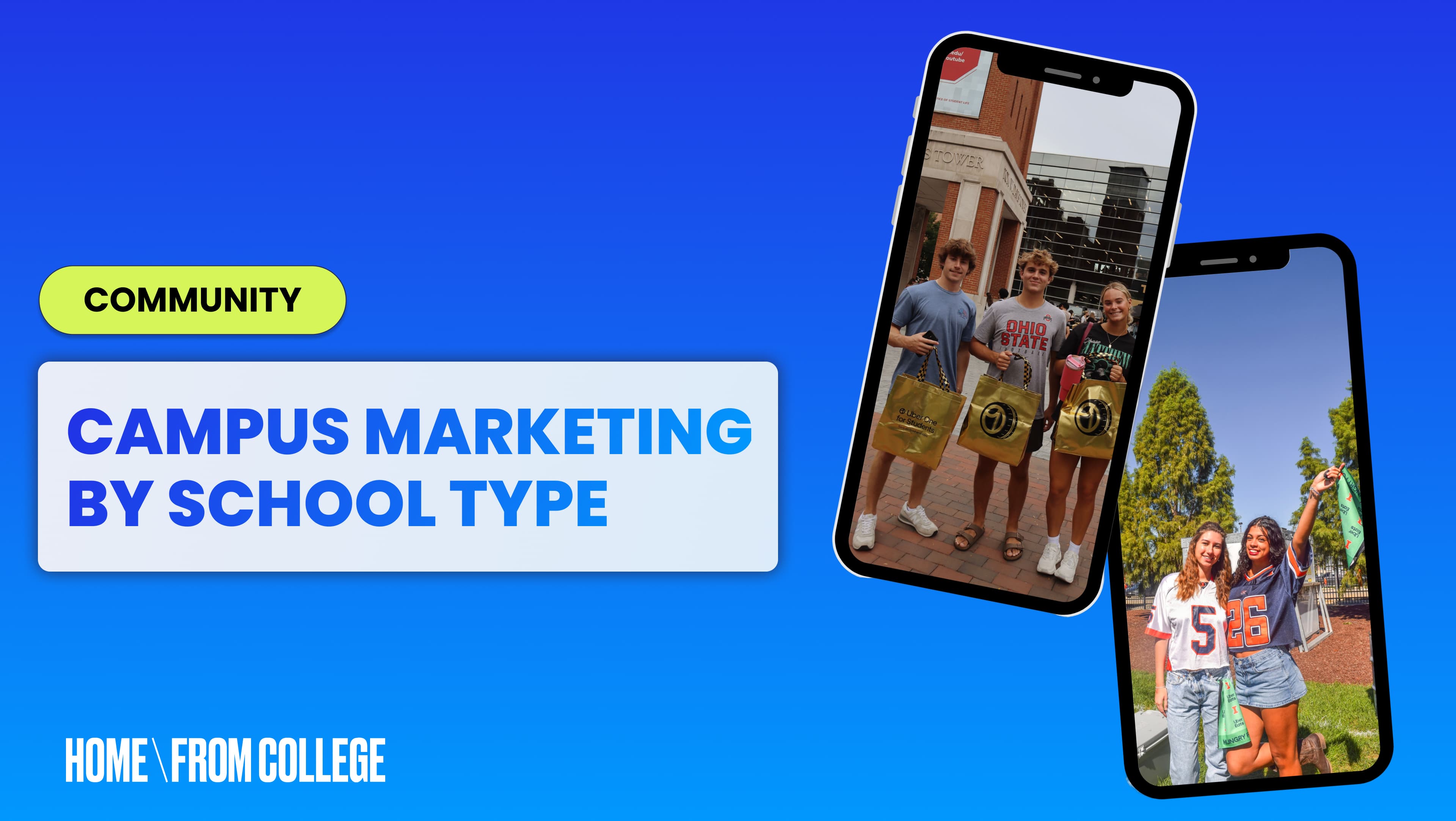
For brands, that excitement creates plenty of opportunities. A beverage company could show up at a tailgate, or a clothing brand could work with student creators on game-day outfits. Students are already documenting their weekends, and a fun activation gives them something else to share. Home From College worked with Uber during March Madness to active 60+ college students at D1 schools to highlight how Uber Eats was a part of their gameday routine, generating 584,000 views on social media.
D1 is an athletics classification, but every school has its own traditions. At Texas A&M, fans stand for the entire game as the 12th Man, a nod to students’ role on the team. At Iowa, players salute the Stead Family Children’s Hospital that overlooks Kinnick Stadium before games. Traditions like these show what matters to each campus, and getting to know what students actually care about is what makes the idea work.
How Can Brands Work With HBCU Homecoming?
If you’ve ever watched HBCU homecoming content online, you know how much excitement surrounds it.
Historically Black Colleges and Universities have rich campus traditions, and homecoming at many HBCUs brings together generations of students and alumni. The celebrations can stretch across several days, with people traveling back to campus to reconnect with their school community.
It’s easy to see why brands would want to be part of that energy, but the interesting part is figuring out how to contribute to an experience that already means so much to the people attending.
Working with students and campus organizations can help brands understand what people look forward to each year. A brand might have an amazing concept on paper, but students can usually tell you pretty quickly whether people would actually be excited about it.
How Do Brands Reach Commuter Students?
When I help plan campus events, I can usually assume that a lot of students will still be around later in the day.
That changes when students are commuting.
Someone might have class in the morning, work in the afternoon, and a train to catch in between. Even if an event sounds fun, staying on campus for another two hours might be difficult to fit into their day.
For brands, getting creative with timing can make a big difference. A pop-up near a busy student center could reach people between classes, while a digital campaign could give students a chance to participate after they’ve gone home.
The best way to figure out what works is to ask commuter students about their routines. They know when campus gets busy and where people tend to spend their breaks.
According to US News, the schools with the largest percentage of freshmen who commute or live off campus include California State University - Fresno (82%), Florida International University (75%), University of Nevada Las Vegas (75%), and Rutgers University (73%).
How Do Brands Reach Small Liberal Arts Colleges?
Now we’re back in my territory.
At a smaller school, I’ve learned that word of mouth can do a lot of heavy lifting. Someone mentions an event at lunch, it gets brought up in a group chat, and by Friday, you realize a bunch of your friends are planning to go.
Working on campus events has made me notice how much people pay attention to who’s putting something together. Students recognize the organizations hosting events, and they’re often curious when they see their friends involved.
I’ve also noticed that people remember the events they genuinely enjoy. You’ll hear someone bring up a fun night weeks later, which is always satisfying when you help plan it.
For brands, a smaller campus offers the chance to work closely with students who already know the community. And because students see each other so often, one good experience can turn into a lot of conversations.
Why Does Campus Type Matter for Creative Briefs?
These categories can overlap. An HBCU can also be a D1 school, and students at a large university might commute. Even two schools that look similar on paper can have completely different campus cultures.
That’s what makes college marketing interesting to me. There’s so much personality in the places where students spend their time, and you can learn a lot by paying attention to how people move through their day.
If I were helping a brand plan an activation, I’d want to know which events students already love and what they’ve been wishing someone would bring to campus.
Those little details can make an idea feel much more connected to the school. And when students are genuinely excited about something, you usually don’t have to wonder whether they liked it. You’ll hear about it.
Frequently Asked Questions
Question: What is the difference between a D1 school and an HBCU?
Answer: D1 is an NCAA athletics classification that describes a school's sports program. HBCUs (Historically Black Colleges and Universities) are schools with a historic mission of serving Black students. A school can be both.
Question: Do commuter schools need different marketing?
Yes. Commuter students often have tight schedules, so timing matters. A pop-up near a busy student center can reach people between classes, and a digital campaign lets them join after they've gone home.
Question: How can brands learn what works on a specific campus?
Ask students about their routines and what they care about, and work with campus organizations. Students can usually tell you quickly whether an idea would land.
Your Privacy
We use cookies and similar technologies for analytics, advertising, and personalization. Non-essential cookies are placed only with your consent. See our Privacy Policy.